Early Season Paddling Destinations in the Adirondacks

This article along with others by me can be found at EMS.

As temperatures rise and the days grow longer, the bountiful lakes, ponds and rivers of the Adirondacks transform from their solid winter state of ice back to liquid blue. With most trails a muddy mess in the spring (especially those in the High Peaks), now is the perfect time of year to get your nature fix by exploring a wilderness waterway by canoe or kayak. The following Adirondack bodies of water are excellent spring paddling destinations that not only offer beautiful scenery, but also stellar opportunities for viewing wildlife.
Thirteenth Lake

Located within the Siamese Ponds Wilderness between the towns of North Creek and Indian Lake, two-mile long Thirteenth Lake is an easily accessible gem for not only paddling, but also hiking and camping. Even on a beautiful summer weekend, it’s easy to find peace and quiet at Thirteenth Lake, especially by paddling to the southern end of the lake away from the Thirteenth Lake parking lot. From the parking lot, a wheelable trail leads approximately 100 yards to the boat launch. While electric motors are allowed on Thirteenth Lake, they’re typically much quieter than their gasoline counterparts, and the vast majority of boats on the lake are typically of the motorless variety anyway. Paddling south from the boat launch, rocky ledges on the western shore that are perfect for swimming and sunbathing will beckon, as will several campsites that are peppered along the lake shore. Four accessible campsites are mere steps away from the parking lot, and several more that can only be accessed by foot and/or boat are scattered about the lake, with the three campsites at the southern end of the lake that can only be accessed by boat providing the most solitude. To hit the triple crown of camping, paddling, and hiking all in one trip, swap your paddle for a pack and boots and take a trail from the lake to destinations such as Hour Pond (7.2 miles roundtrip and 1,000 feet elevation gain from parking lot) or Peaked Mountain (8.6 miles roundtrip and 1,400 feet elevation gain from the parking lot). While hiking these trails and paddling the southern end of Thirteenth Lake, keep an eye out for moose, which are known to frequent these areas.
South Inlet

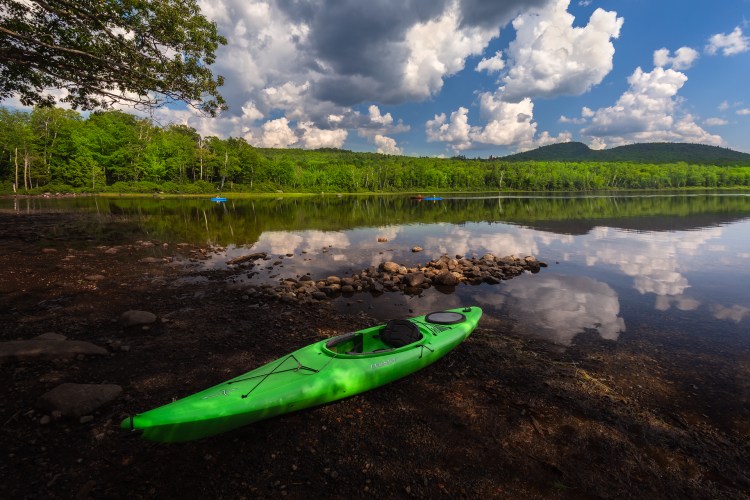
Flowing into the southern end of Raquette Lake proper, South Inlet is a quiet and beautiful spring paddle and a great way to get away from the crowds, motorboats, and choppier water of the main body of Raquette Lake. From the parking pull-off on NY-28, a short carry leads down to South Inlet. Alternatively, if you’re camping at nearby Golden Beach Campground on Raquette Lake (2022 opening date of May 20th), you can paddle over roughly a half mile from the campground to the opening of South Inlet. The further you paddle away from the road, the quieter it gets, and soon the only sound you’ll hear is the dip of your paddle and possibly the slap of a beaver tail. South Inlet is an excellent place to view spring wildlife such as great blue herons, river otters and beavers, especially at dawn and dusk. From the boat launch, one can paddle a little over 2 miles south (against a gentle current) until reaching a picturesque waterfall. The pretty cascades are located at the turnaround point, making this is an excellent place to get out of the boat for a picnic lunch and to take a dip in the chilly water before turning around and paddling back the way you came.

Rollins and Floodwood Ponds

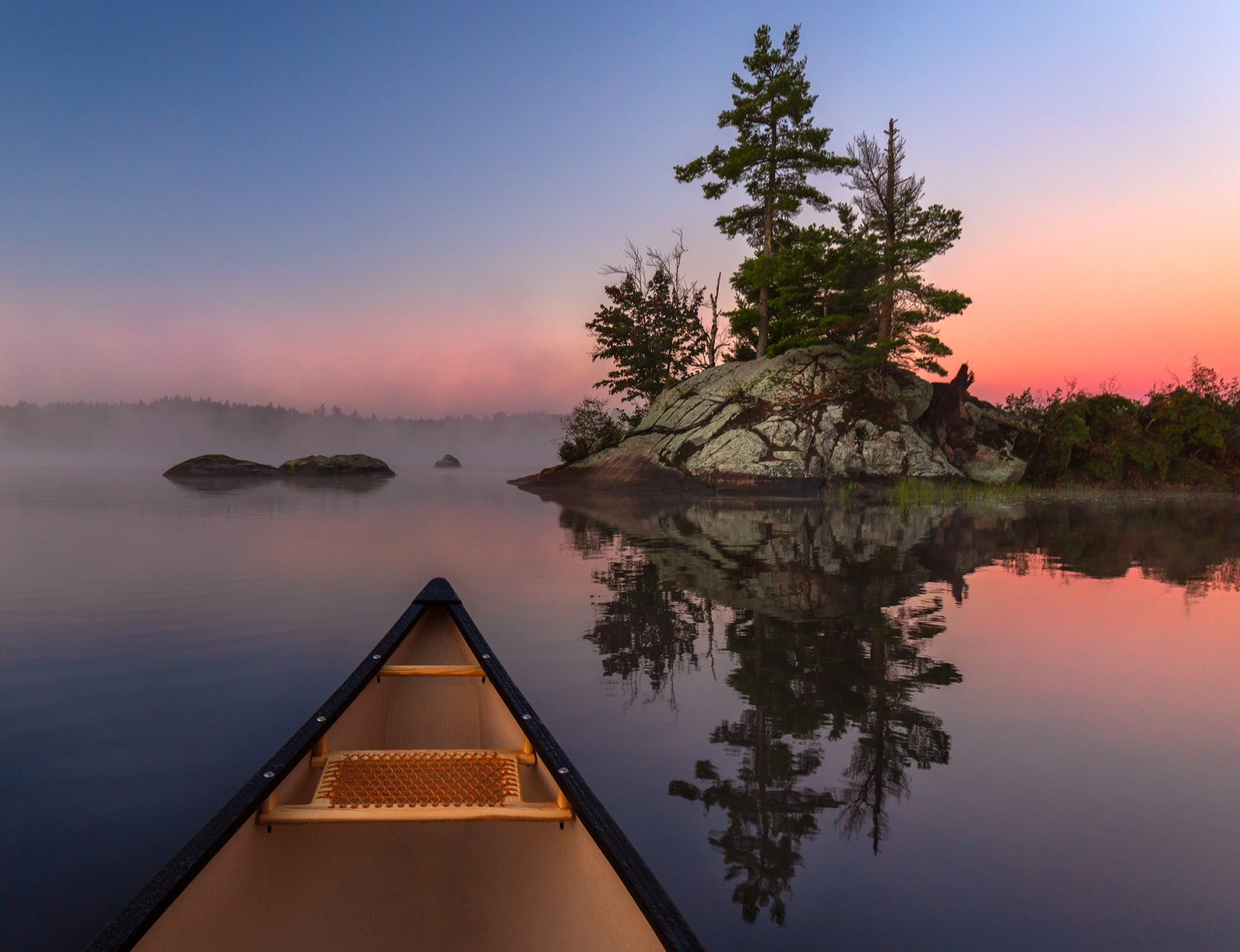
Whether as a daytrip or an overnight at one of the 200+ waterfront campsites at Rollins Pond Campground, Rollins Pond is a fabulous spring paddling destination that links to several other ponds to keep the paddler occupied for a full day, or days. Note: If paddling before the campground opens in mid-late May (2022 opening date is May 20th), Rollins and Floodwood Ponds can be paddled by parking at the Floodwood Outpost of Saint Regis Canoe Outfitters, located at the northwest corner of Floodwood Pond. Rollins Pond is roughly 2 miles in length, and a day could easily be filled by paddling its winding shoreline and exploring quiet bays. A handful of small islands also dot the pond and make for interesting photography subjects, especially on a calm dawn when the glassy surface of the pond facilitates perfect reflections. Before getting out on foot to explore any of the islands, first paddle around to see if there are any nesting loons, and if there are, don’t disembark.

On the northern end of Rollins Pond, a narrow creek leads 100 yds to Floodwood Pond. The creek is typically deep enough to paddle in spring, but if rocks or the current impede travel, it’s best to get out and wade the rest of the creek. Floodwood Pond is smaller and quieter than Rollins, as it lacks a developed campground. Camping is still an option at Floodwood, however, as several primitive first-come, first-served campsites are located along the pond and its islands. For a more ambitious day, an 8-mile loop can be made by linking Floodwood, Little Square, Copperas, Whey, and Rollins Ponds, with 2-3 short portages depending on the water level of the ponds.
Follensby Clear Pond

As we enter into the spring and paddling season I wanted to revisit an article I wrote in 2021 about Follensby Clear Pond. This article and others written by me can be found at EMS.

As the days grow longer, the temperature rises, and frozen lakes and ponds return to their liquid state, the serene waters of the Adirondack Mountains beckon the outdoor adventurer to stow away their snowshoes and skis and break out a canoe or kayak for long sunny days of aquatic exploration. Home to over 3,000 lakes and ponds (including classics like the Seven Carries), a paddling destination suited for every taste can be found in the vast Adirondack Park, but for a fine introduction to what backcountry canoe camping in the Adirondacks is all about, head to Follensby Clear Pond in the Saranac Lakes Wild Forest.

Finding Camp

While small enough (roughly 1.5 miles from end to end) to explore in a day, the beautiful waterfront campsites, plentiful wildlife, and options for further exploration make Follensby Clear an ideal basecamp to call home for a few days. After launching from the parking area at the south end of Follensby Clear Pond on State Route 30 (where a dock facilitates the loading and unloading of boats), glide through the placid waters as you bid adieu to civilization. Trace the sinuous shoreline, keeping an eye out for herons hunting in the shallows, and scout out the numerous campsites that pepper the shore. Note: The DEC periodically closes campsites and builds new ones in popular locations such as Follensby Clear, so give the regional DEC office a call ahead of time to find out the most up to date status. Contact info and other details and regulations can be found at the Saranac Lakes Wild Forest DEC website.

While the closest campsites are a mere stone’s throw from the parking lot, press on to the quieter northern half of the lake to avoid most of the day-tripper traffic and to discover primo island campsites (including one of the only lean-tos in the area) as well as a large and beautiful campsite on a peninsula that extends from the western shore in the north end of the pond. All campsites are first come, first served and have an outhouse or open-air “thunderbox” as well as a fire ring, but no picnic table or food storage lockers. While bear canisters aren’t necessarily required in the Saranac Lakes Wild Forest, they’re highly recommended to avoid having pesky rodents and raccoons getting into your food bag, even if it has been expertly hung.

Side Trips

Once camp is established, spend your days either lounging around camp or heading out to some of the enticing destinations that make for perfect daytrips from camp.

Horseshoe and Polliwog Pond

For a half-day loop that visits three additional ponds and has very short portages, find the portage trail on the west side of Follensby Clear, located about midway up the pond and just southwest of the island that has the lean-to campsite. Take the short portage trail down to the landing at the eastern corner of lovely Horseshoe Pond and explore the interesting peninsula (complete with a killer campsite) that can be seen across the pond from the landing. After enjoying the solitude of Horseshoe Pond, paddle to the northwest corner of the pond to make the short portage to small and boggy Little Polliwog Pond. The portage trail intersects with the Horseshoe Pond Trail, which makes for a nice leg stretcher and heads north to Polliwog Pond or south back to Horseshoe Pond. Once on Little Polliwog Pond, paddle northeast to the downhill portage trail to much larger Polliwog Pond and take your time exploring Polliwog as you work your way to the northeast corner of the pond and the short portage trail back to Follensby Clear Pond.

Fish Creek Ponds to Upper Saranac Lake

For a longer, seven-plus mile excursion from Follensby Clear that’s best saved for a calm day, paddle back towards the launch site at the southern end of Follensby Clear and carefully work your way along the shallow creek that’s just east of the launch site and parking area. This creek section of the paddle is short but in late summer may require a wet carry through some shallow sections, so dress accordingly. After entering the east side of Fish Creek Ponds, head south to the channel that leads east to Fish Creek Bay on Upper Saranac Lake (be aware of motorboat traffic, particularly on summer weekends). Continue paddling east out of the bay, and if the weather is calm, continue to Buck Island and its interesting shoreline dotted with campsites and perfect picnic spots on sunny rock slabs. Return the way you came to arrive back at Follensby Clear.

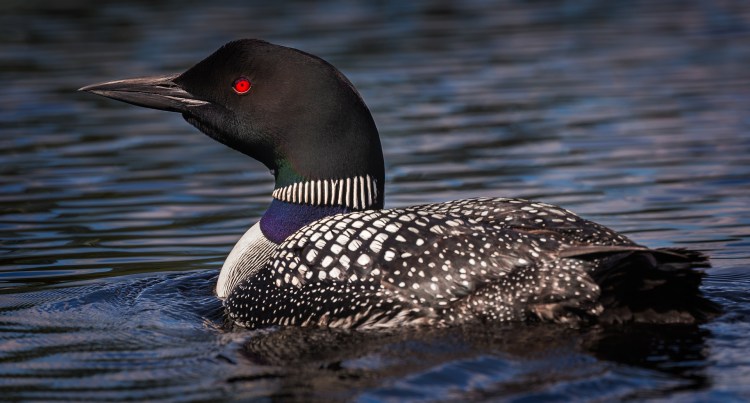
Whether the day has been spent paddling to distant waters or relaxing at camp, there’s no finer way to end a wonderful day on the water than by taking a dip and laying out in the sun to dry. As night approaches, light up a campfire and listen to it crackle as the haunting call of loons echoes across the lake, quite possibly the most Adirondack way to cap off an exhilarating day of paddling in the vast Adirondack wilderness.

Photo of the Week

The sun begins to set over the green-gray North Atlantic Ocean, as seen from the hexagonal basalt columns of Giant’s Causeway. Legend has it that the Irish giant, Finn McCool, built the Causeway across the North Channel so that he could fight the Scottish giant, Benandonner. After building the causeway and coming face to face with Benandonner, Finn hid from Benandonner when he realized that his foe was much bigger than he was. Finn’s wife, Oonagh, then disguised Finn as a baby and tucked him in a cradle. When Benandonner saw the size of the ‘baby’, he reckoned that its father, Finn, must be a giant among giants. He fled back to Scotland in fright, destroying the causeway behind him so that Finn would be unable to chase him down. In support of this legend, across the sea at Scotland’s Fingal’s Cave, there are identical basalt columns which are part of the same lava flow. Prints Available.

Photo of the Week

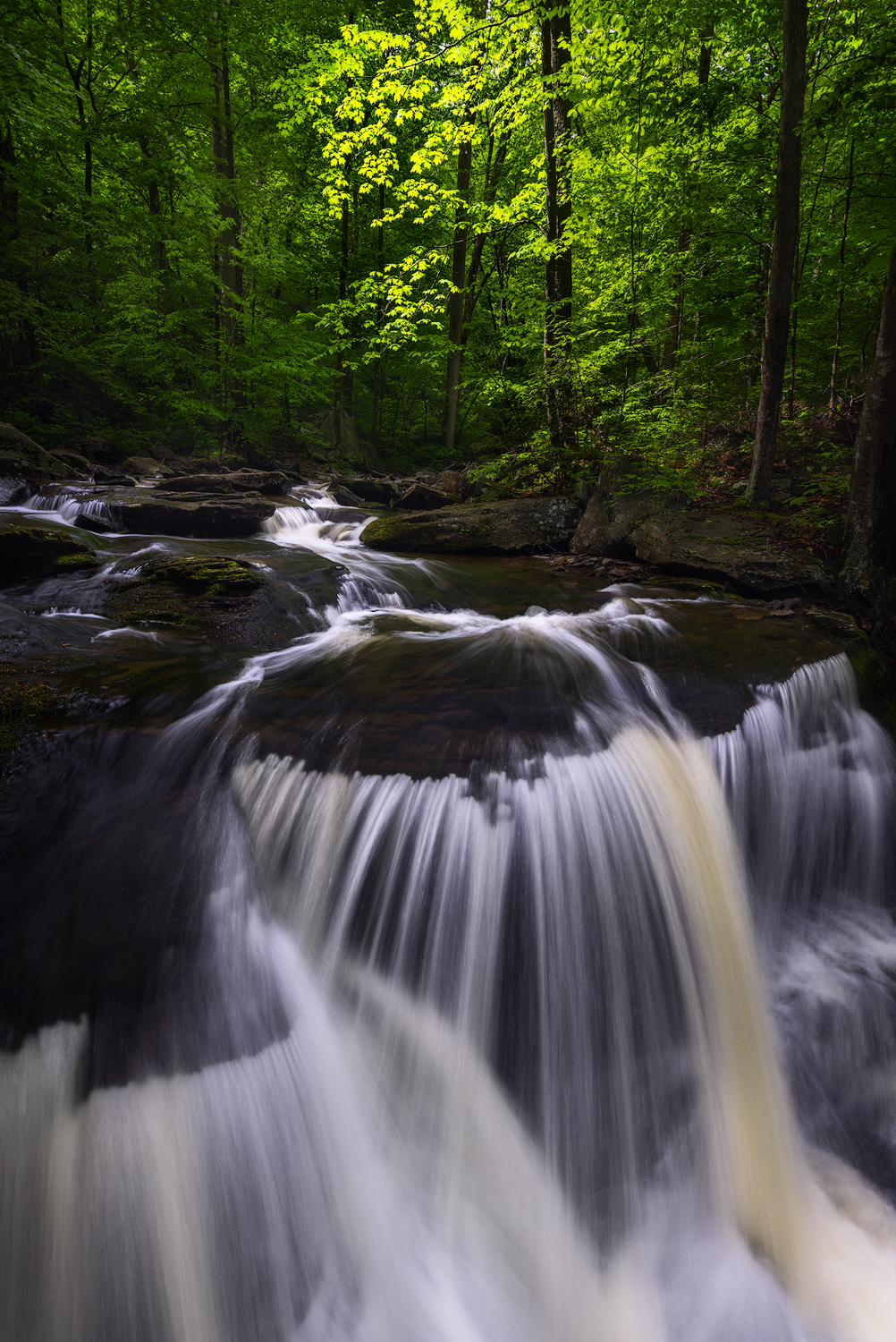
While photographing waterfalls, there’s one phrase that’s often in my head – “get wet.” I love getting right into the water (where it’s safe to do so) and feeling the cool water surge over my legs, almost as if I’ve become part of the stream – a human boulder of sorts that the water must navigate around. Besides feeling in tune and connected with the water, getting wet in these situations also serves the purpose of putting me at an optimal vantage point to get my camera right up near a cascade to use as a bold foreground, like in the image shown here. Ricketts Glen State Park, Pennsylvania. Prints Available.