
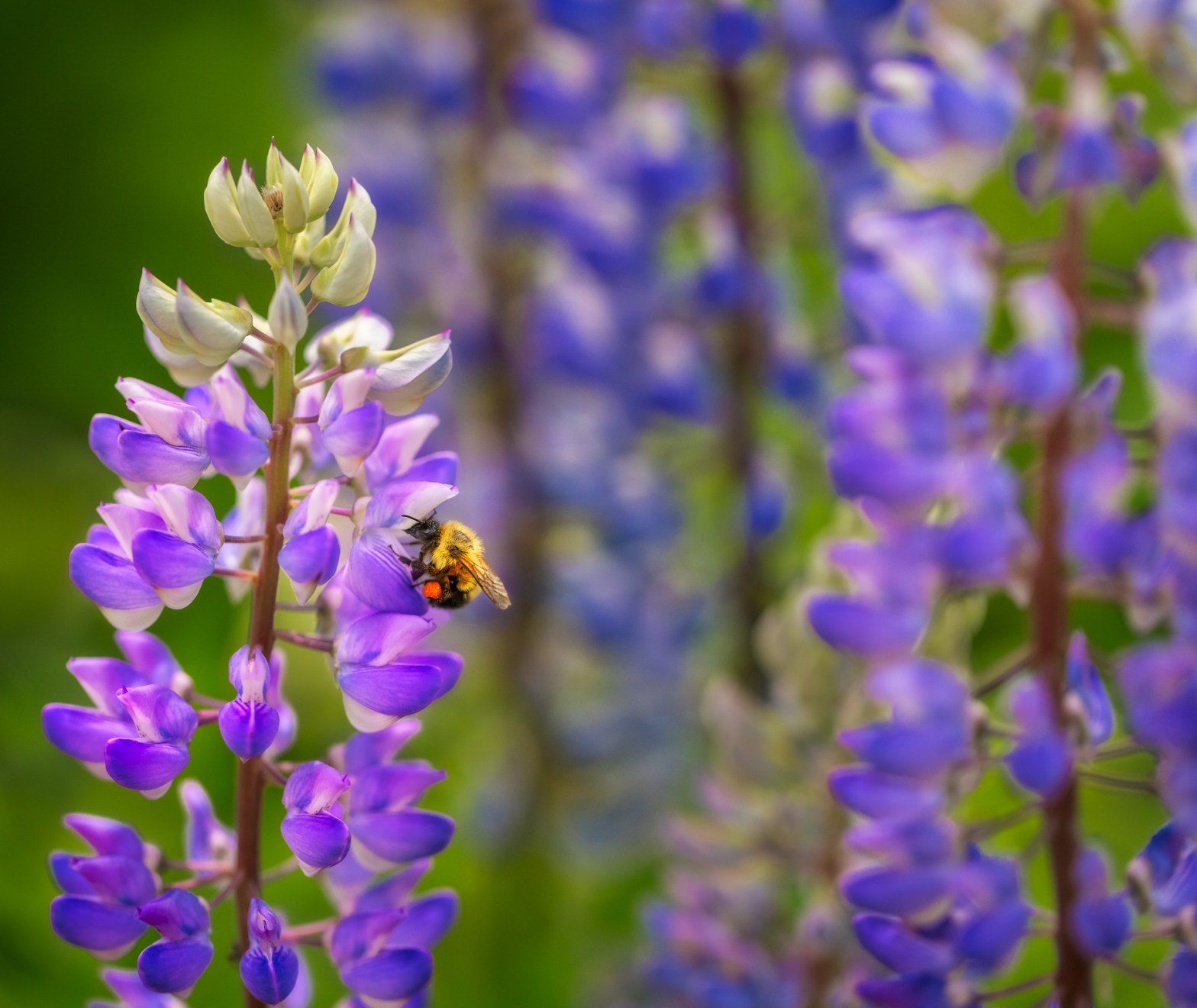
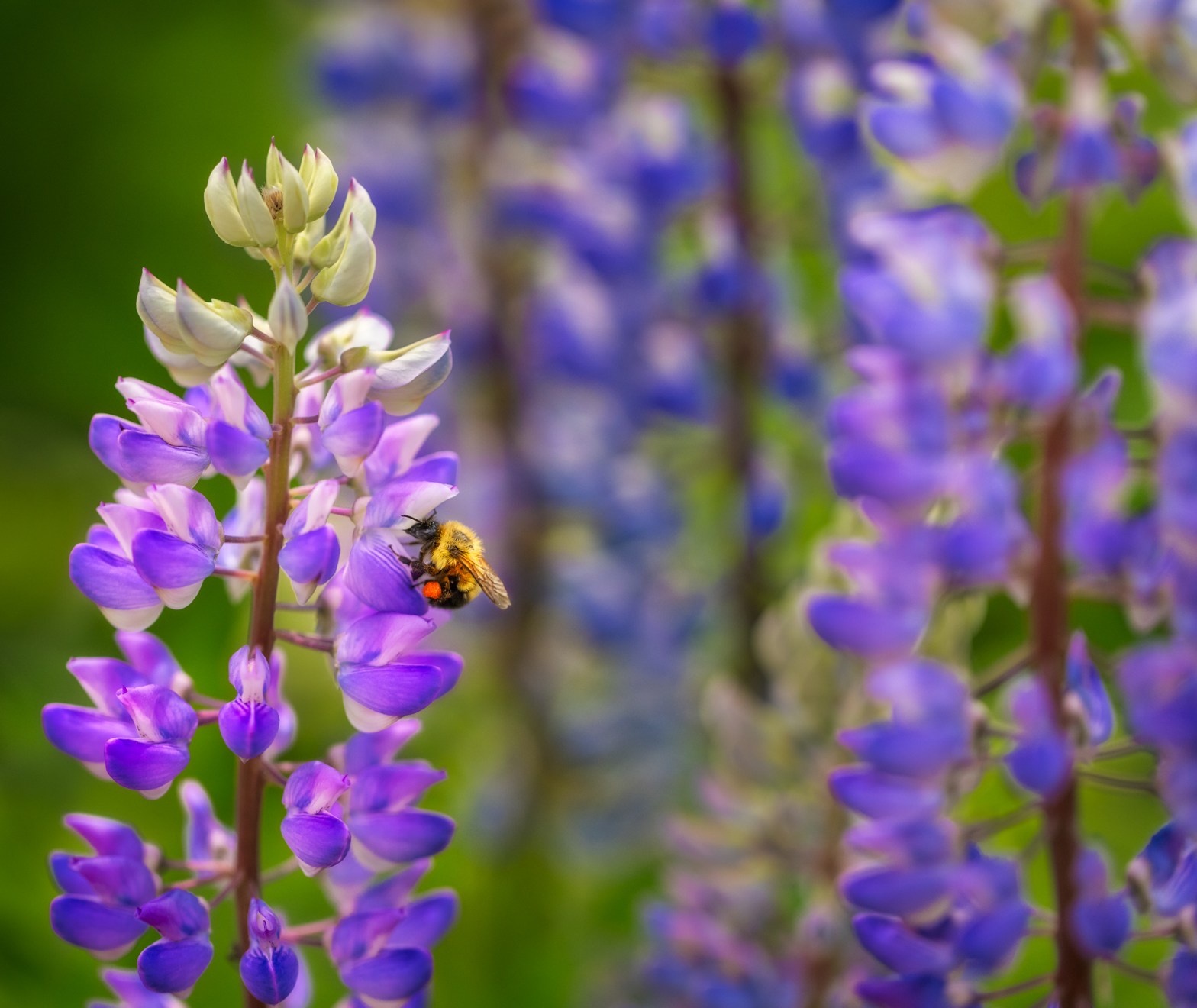
Maine’s Acadia National Park is stunningly beautiful any time of year, but the first half of June provides some extra flair when the lupines bloom. I used my macro lens to get this intimate shot of a bee visiting one of the flowers, and I was especially intrigued by the ball of pollen that the bee had collected on its leg. Prints Available.
Explore Like a Local – Springtime Adventure in Bar Harbor, Maine
This article along with others written by me can be found at EMS.
The Maine town of Bar Harbor is not only a fabulous coastal town filled with boutique shops, lodging accommodations, and restaurants serving up the freshest and tastiest lobster imaginable, but it also serves as an ideal base from which to explore the magnificent Acadia National Park. For a getaway that blends relaxation and fine dining with a bevy of outdoor adventure options, it’s tough to beat Bar Harbor, and this guide to exploring Bar Harbor like a local will ensure that you get the most out of a spring visit to this captivating seaside haven.
Watch the sun rise over the ocean
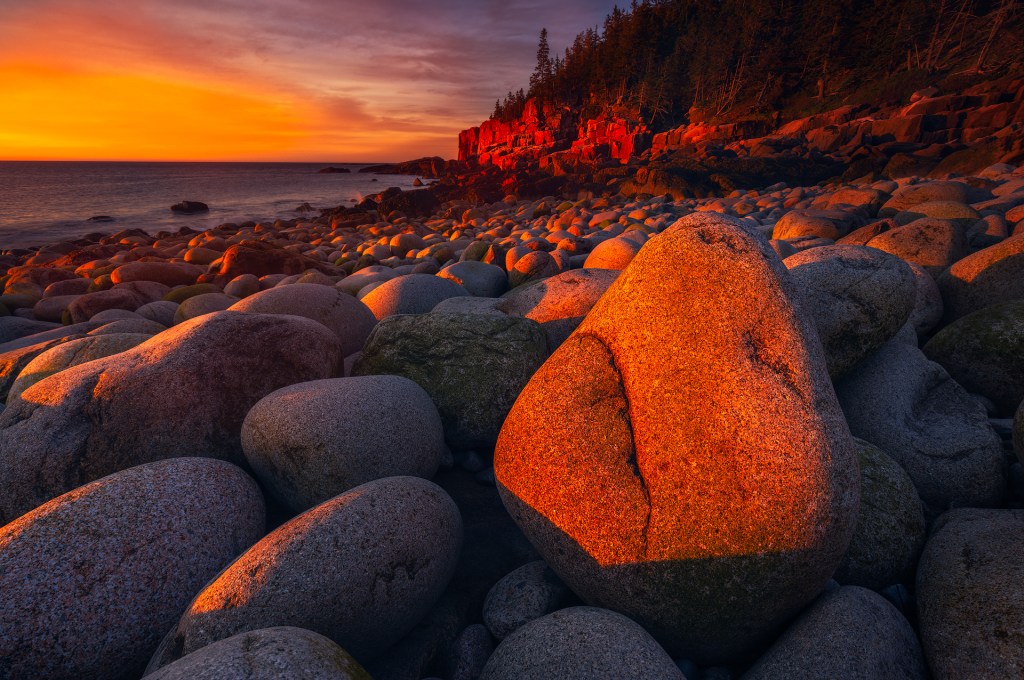
There’s no better way to start a day than by watching the sunrise, especially in a place like Bar Harbor when it rises over the ocean and bathes the rugged granite Acadia coast in warm light. A short drive south from Bar Harbor leads to the Ocean Path Trail, which hugs the rocky coast and offers uninterrupted views to the east that facilitate watching the bright orange orb of the sun poke above the distant horizon. Boulder Beach, set at the foot of Otter Cliff, consists of large boulders that have been smoothed and rounded over time by the action of waves, and is a popular area to watch and photograph the sunrise. However, there are endless, unnamed nooks and crannies along the Ocean Path where it’s more likely to find solitude that are a short walk from the various parking lots and pull-offs along the Park Loop Road.
Hiking
After sunrise, consider hiking the length of the Ocean Path before the crowds pick up. From Boulder Beach, it’s a 1.5 mile hike north to Sand Beach which, as the name implies, is a rare stretch of sandy beach that makes this a great place to take a refreshing dip in the chilly Atlantic Ocean before retracing your steps back to your car.
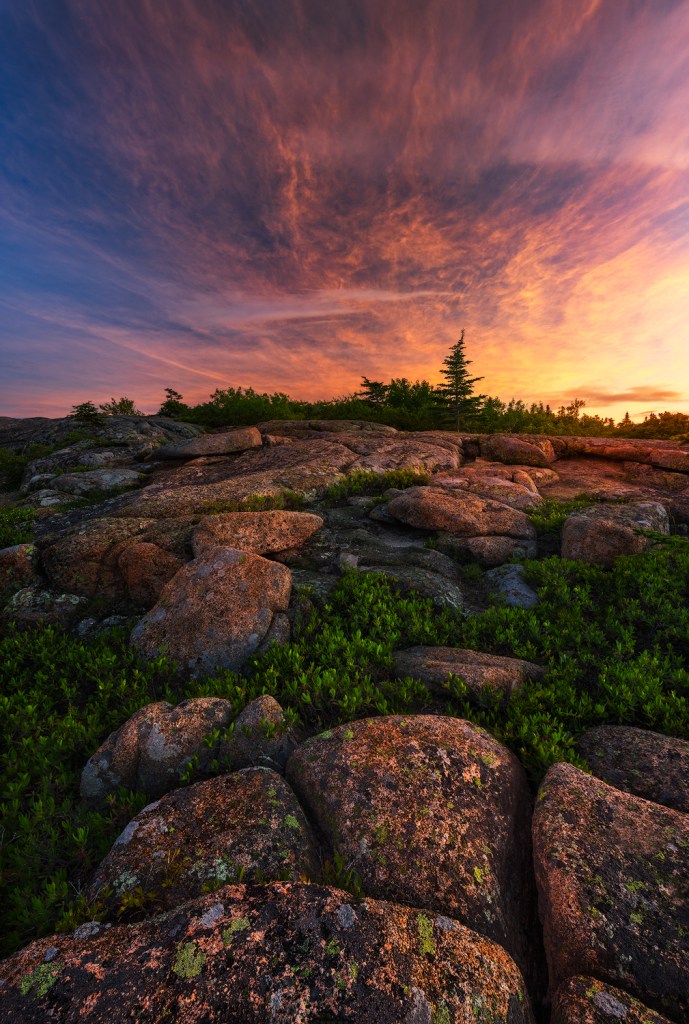
The Ocean Path is just one of many hiking trails in the vicinity of Bar Harbor. Two other coastal trails that are typically less crowded than the Ocean Path are the Compass Harbor Trail (0.8 miles out-and-back) and the Great Head Trail (1.8 mile loop). While these trails provide an intimate view of the Acadia coast, climbing one of the many mountains in Acadia will provide a different, bird-eye perspective of the ocean. The star of the show when it comes to summits in the park is without a doubt Cadillac Mountain. While the easy option is to drive to the summit, it’s also possible to earn your views by hiking the South Ridge Trail to the summit. Once at the summit, a network of trails leads to seemingly endless views of the rolling hills of Mount Desert Island with the ocean far below. Berry bushes and small wildflowers fill the cracks between the granite bedrock of the summit, which glows a beautiful orange-pink at sunrise and sunset, and makes an early or late voyage to the summit oh so worth it. While wandering the summit, be sure to stay on established trails and do the “ rock hop” to avoid trampling the fragile vegetation that’s found at the summit.
Looking for an adrenaline rush? Consider hiking some of Acadia’s ladder trails, which employ metal railings and ladders to allow hikers to clamber to unencumbered views.
Camping
The Bar Harbor area is blessed with a variety of private and public campgrounds that make it easy to turn a visit to Bar Harbor into a camping trip. Blackwoods Campground, located just off the Ocean Path near Otter Cliffs, is the largest campground in Acadia National Park, and has 281campsites. In addition to the Blackwoods Campground, several privately-owned campgrounds and cottages are available in the Bar Harbor vicinity. Camping not your cup of tea? Fret not, as Bar Harbor boasts a bevy of lovely bed and breakfasts and hotels. I’m particularly fond of the Atlantic Eyrie Lodge, with its ocean views, beautiful outdoor pool, complimentary breakfast, and pet-friendly rooms.
Eating
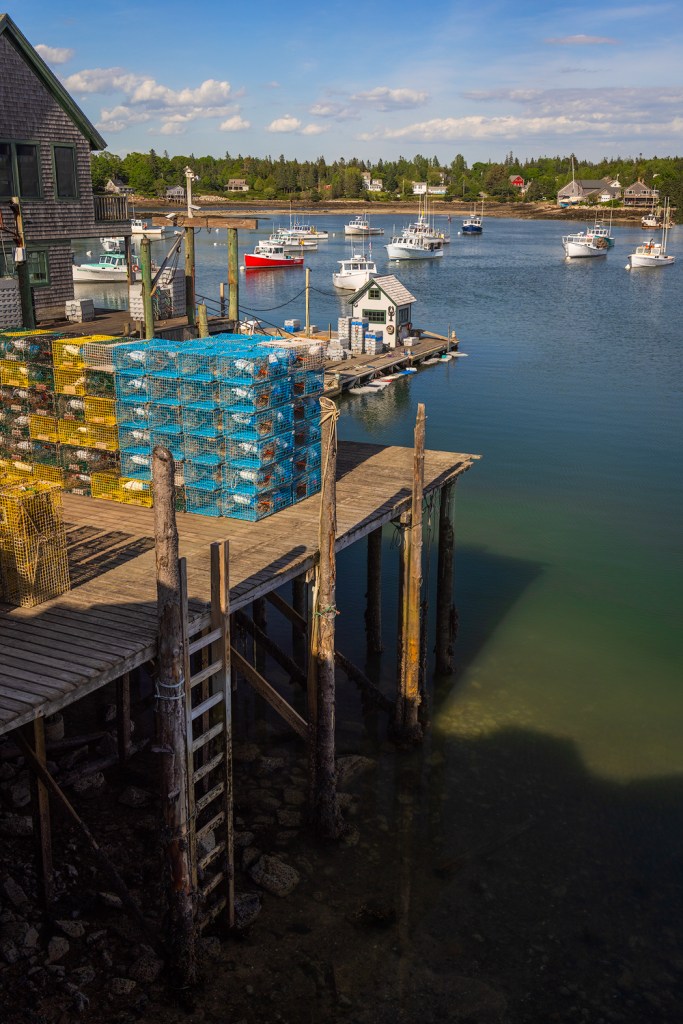
When it comes to dining in Bar Harbor, it’s all about the lobstah. These delicious crustaceans can be found at pretty much any restaurant in town, and it’s honestly hard to go wrong with any of them. For oceanfront dining right in town, head to Stewman’s Lobster Pound, but first stop at Paddy’s across the street for cocktails or a local blueberry beer and the to-die-for St. James crab and lobster dip loaded with fresh-caught crab and lobster. For a bit of a road-trip out of Bar Harbor, drive a half hour to Thurston’s Lobster Pound, where you can pick out your lobster of choice before having a feast with all the fixings while looking out at the boats that brought in your meal from the sea.
Carriage Roads
Acadia National Park is blessed with a vast network of carriage roads that crisscross the park and lead to lakes and trailheads. While these roads were once used extensively by horse carriages (and still can be used by horse riders today), they’re now primarily the domain of hikers, runners, and bikers. Biking in particular is an excellent way to explore the interior of the park on the carriage roads. Don’t have a bike of your own? Book a rental in town and then hit the carriage roads for a day of two-wheeled fun.
Climbing
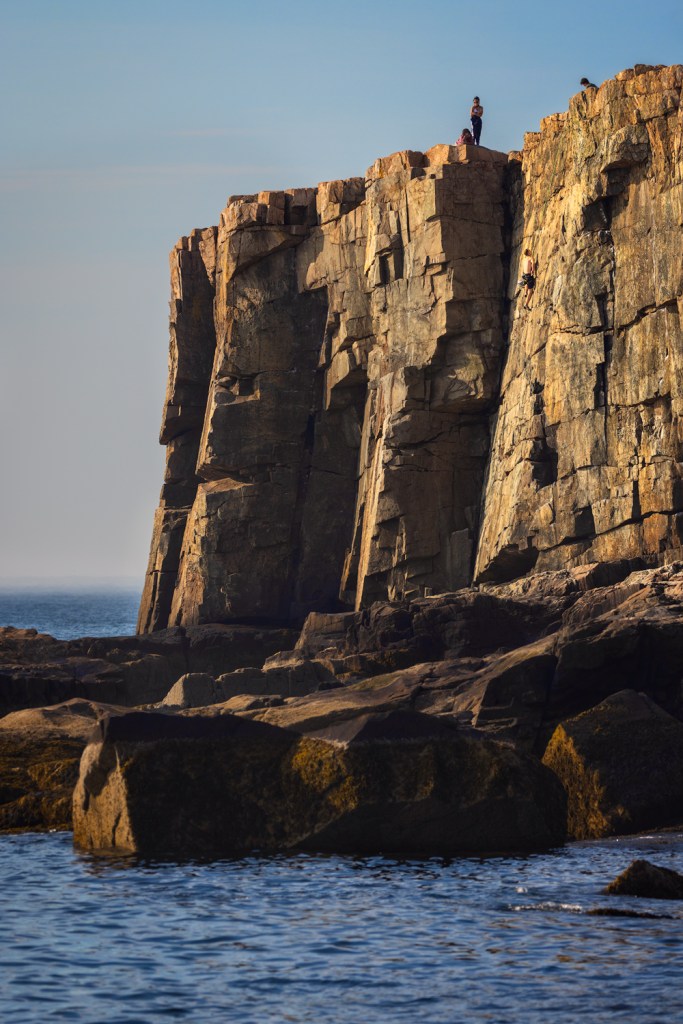
The pink granite that is prevalent throughout Acadia National Park makes for excellent rock climbing. Popular locations for climbing include South Bubble, Great Head, and Otter Cliffs, which provides an exciting and rare opportunity to rock climb on a wall rising directly from the Atlantic Ocean.
Wildflowers
As if the rocky coast, lush mountains, and placid lakes didn’t bless the Bar Harbor area with enough natural beauty, in the spring numerous varieties of wildflowers add a special touch of color to the already magnificent landscape. Trails stemming from Sieur de Monts, such as the Jessup Path, are excellent places to look for wildflowers on foggy mornings. The showiest flower, the lupine, blooms in the first half of June, and provides gorgeous accents of purple, white and pink to meadowy areas of Mount Desert Island. A particularly dense patch of lupines can be found at Great Meadow. While viewing lupines and other wildflowers, be mindful to stay on established trails so as to not trample the delicate flowers, and never pick any flowers no matter how beautiful they might be.
Photo of the Week

Fourth of July fireworks and the full “Buck Moon” light up the sky and reflect in the calm waters of Great Sacandaga Lake. Adirondack Park, New York. Prints Available.
Photo of the Week

A beautiful sunset reflects in a placid pond during a backcountry canoe camping trip in the Adirondacks. Prints Available.
Photo of the Week
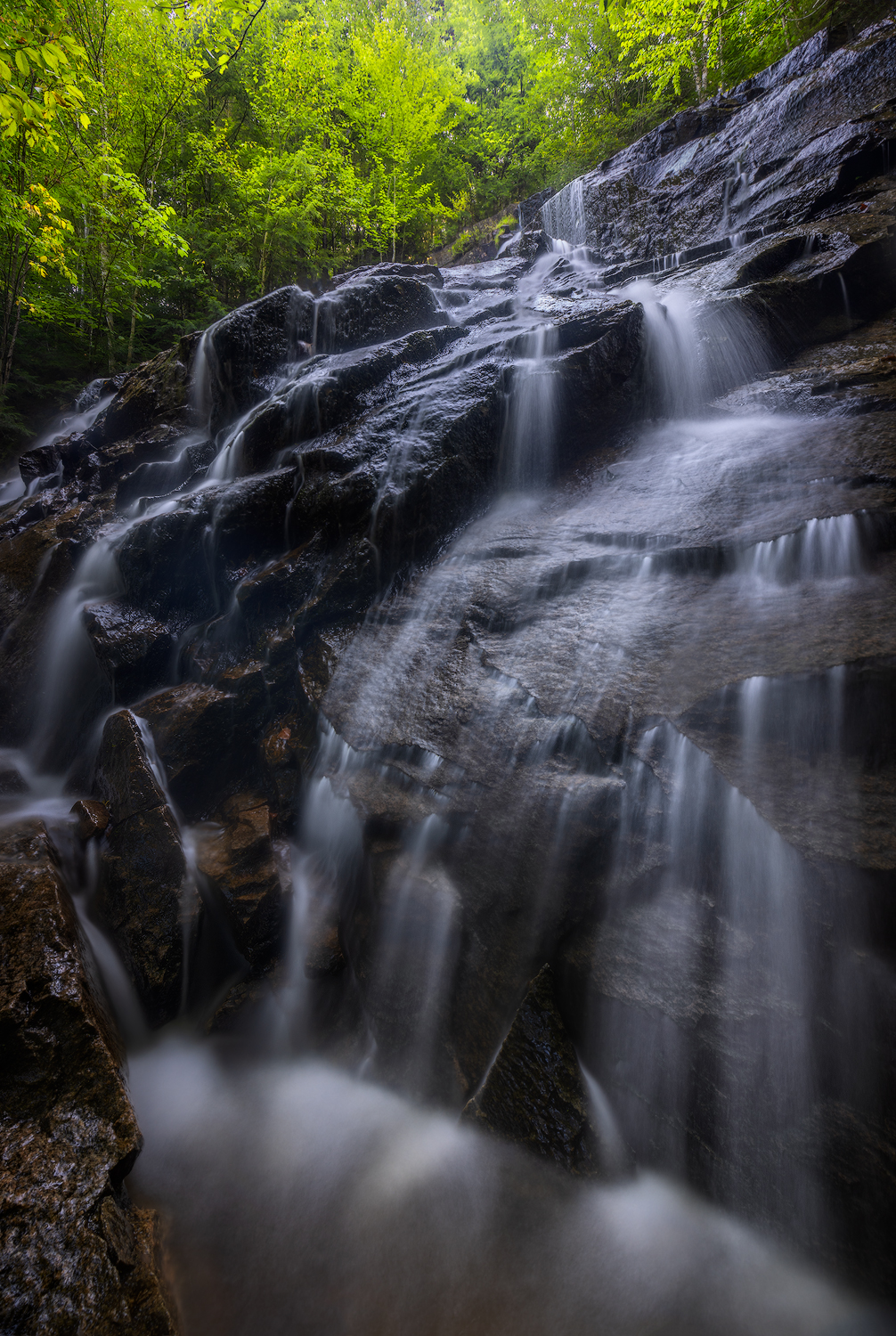
A waterfall gently cascades down from the vibrant spring forest in the Adirondack Mountains. Prints Available.
Photo of the Week
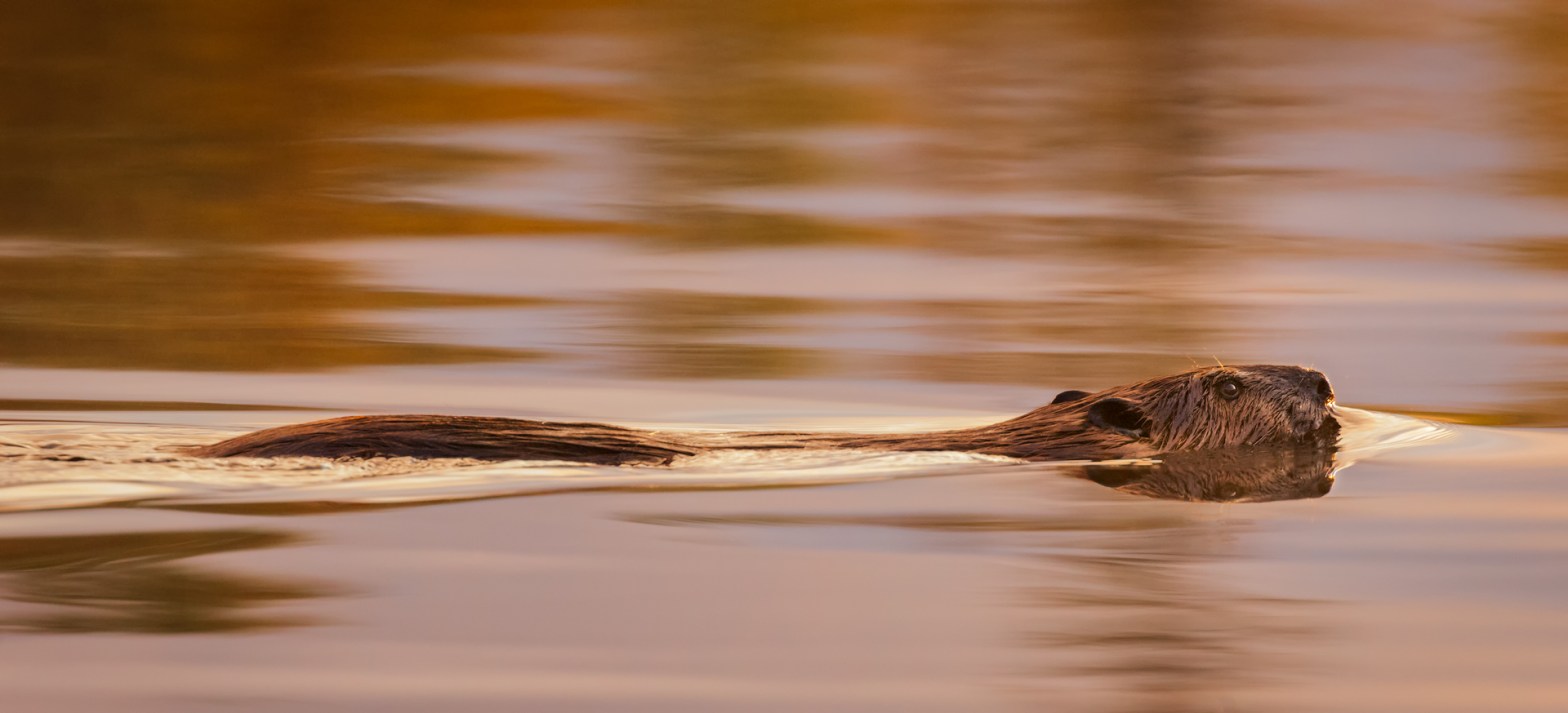
While out for a sunrise paddle, a beaver had the same idea and swam right in from of us on its search for breakfast. Adirondack Mountains, New York. Prints Available.
Photo of the Week

Green forest rings a picturesque lake on a beautiful summer morning in Vermont. Prints Available.
Photo of the Week

A house finch that was busy gathering twigs to build its nest paused just long enough for me to snap this photo. Prints Available.
Photo of the Week
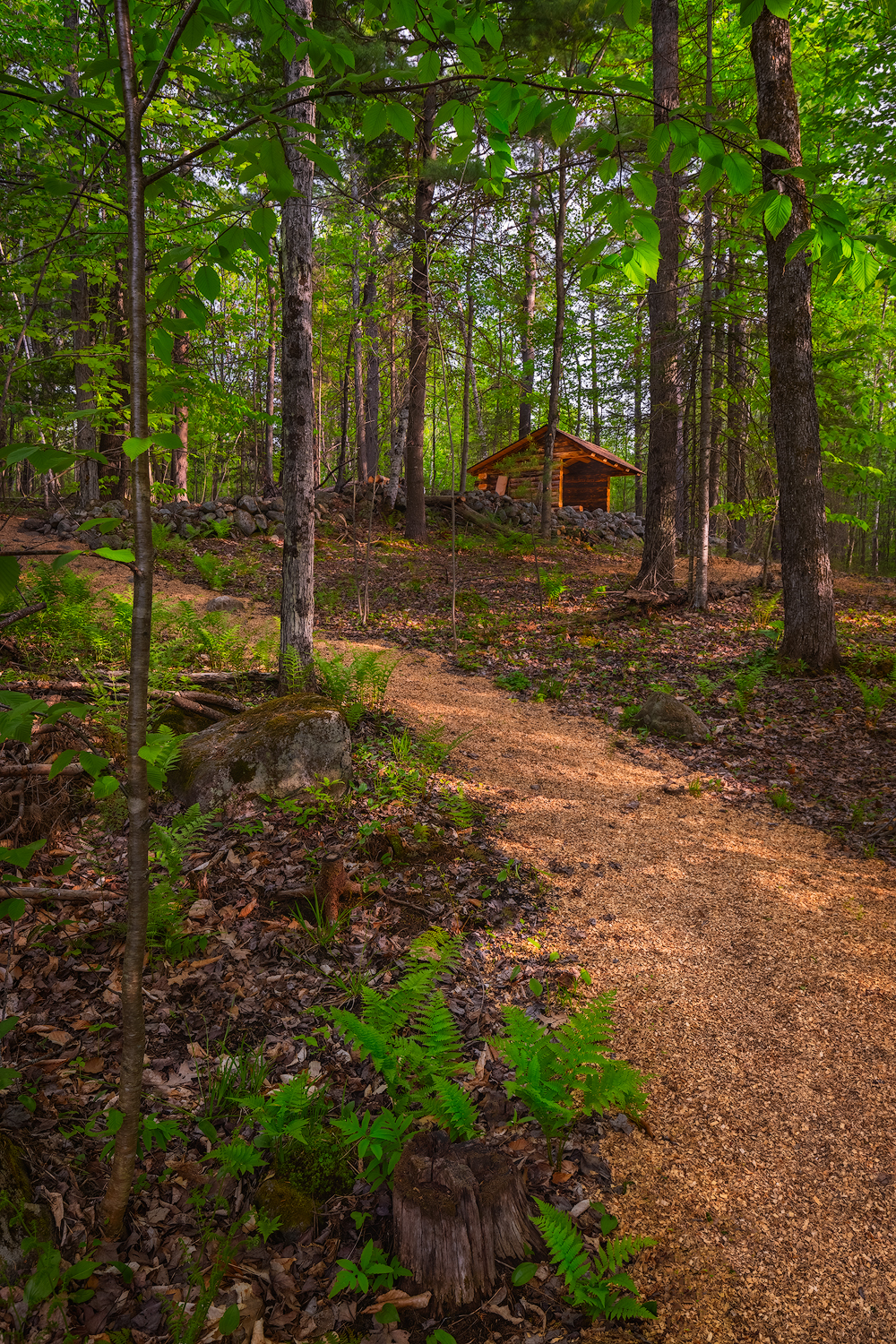
A lean-to tucked away in the vibrant spring forest at an Airbnb.
Photo of the Week

A treehouse in Vermont’s Northeast Kingdom was the perfect escape on a drizzly summer day.
 Joey Priola Wilderness Photography